
Grant County Sex Offender Checks
The public starting point is the New Mexico DPS Sex Offender Registry, which uses OffenderWatch. New Mexico Department of Public Safety manages the statewide system through its Law Enforcement Records Bureau. Grant County Sheriff's Office registers qualifying residents, verifies the information required by law, and enters compliance updates that feed the public interface and law-enforcement systems. This split matters. DPS runs the search platform, while the sheriff is the local point for registration details and suspected noncompliance.
Begin with the narrowest sound search. A name can locate a known person, while an address, ZIP, county, map, or radius route can show published registrations around a place. Check aliases and physical details before drawing a match. Then read the offense, registration status, address, and registering agency together. A result is a public safety record, not a prediction of present conduct. An empty result is also limited because publication rules do not cover every person with a qualifying history.
Grant County OffenderWatch Address Alerts
The Grant County Sheriff's Office page connects residents to confidential OffenderWatch address alerts. A user may register more than one county address and receive email notice when a newly registered offender is reported within one mile. That makes the tool useful for a home, a relative's home, or another place tied to family safety. The alert is a notice layer, not a substitute for opening the official profile and confirming its status.
The state interface also supports map and list views. Use the map to understand proximity, then open the individual result instead of relying on a pin alone. Street placement can be imprecise, and a profile may show only the address information New Mexico law permits for release. Keep the alert email for its link and date, but return to the live registry when making a current safety plan.
The New Mexico Corrections Department Offender Search provides a separate view of state incarceration and adult supervision.
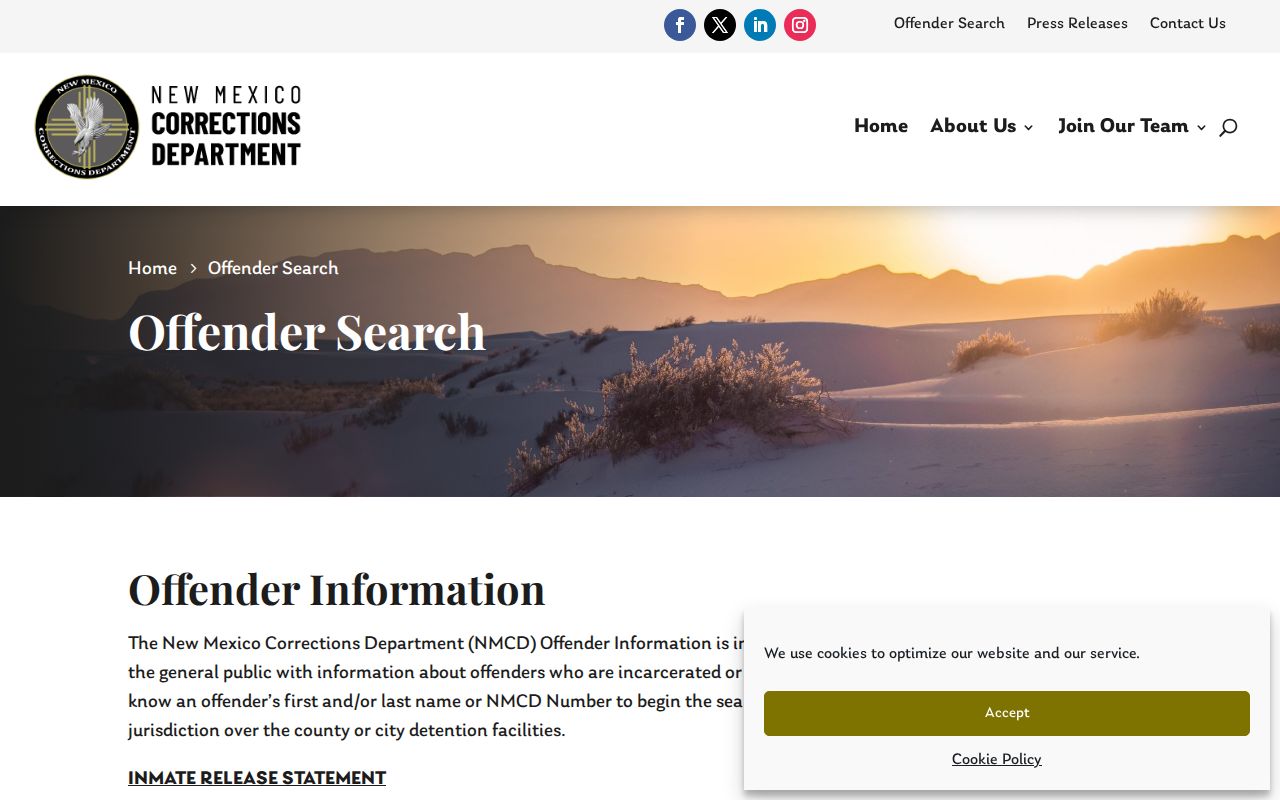
This state corrections screen helps distinguish a registry entry from a current prison, probation, or parole status, which is maintained in a different system.
New Mexico DPS OffenderWatch Searches
The official New Mexico OffenderWatch search offers several routes because a Grant County registry lookup may start with either a person or a place. The controls can change, so read the live labels and search conditions before submitting. Name fields work best with exact spelling. An address search can be narrowed through the geographic controls that are present, while county or ZIP filters help prevent results from similarly named communities elsewhere in New Mexico.
- Open the official New Mexico DPS registry and review its conditions of use.
- Choose a name search or a place-based route using an address, ZIP, county, or map control.
- Review the result list and compare aliases, physical details, address, and registering agency.
- Open the full profile, read its offense and compliance fields, and confirm the live status before relying on it.
| Field or Control | Type | Required | Use |
|---|---|---|---|
| First and last name | Text | Optional route | Search a known person and review aliases. |
| Street address | Text | Optional route | Begin a location-based search. |
| Radius | Dropdown | With address route | Set the available distance around the address. |
| County or ZIP | Select or text | Optional | Narrow results to Grant County or a local ZIP. |
| Map or list | View control | No | Switch between geographic and result-list views. |
| Email notification | Signup workflow | No | Register an address for proximity notices. |
Note: A map point or result card is only a starting cue; use the full live profile to confirm the published registration details.
No Grant County Registry Result
No result does not establish that a person has no sex-offense history. DPS states that not every person convicted of a sex offense must register and not every registrant is publishable. New Mexico's operational categories include non-releasable groups, so a lawful registration can exist without a public profile that appears like a standard released entry. Spelling, aliases, a recent move, or timing of an update can also affect a search.
Try the name again with fewer fields, then check likely aliases and a place-based search. If the concern crosses a state boundary, use the national search. For a concrete compliance concern in Grant County, contact the sheriff or the DPS SOR unit rather than trying to investigate a household. The correct question is whether the official custodian has a reportable concern, not whether neighbors can fill gaps in public data.
Registry Profiles: What They Show
An OffenderWatch profile combines identifying details, address information, the qualifying offense, and registration status where those fields are legally publishable. Read the fields as a set. A photograph can help distinguish people with similar names, while aliases and physical marks can prevent a mistaken match. The registering agency identifies the office responsible for the local record. Offense and conviction fields describe the legal basis for registration, not a new allegation.
| Name and Aliases | Published legal name and other recorded names that help separate similar identities. |
|---|---|
| Photo and Description | Photograph plus legally releasable age or birth information, height, weight, hair, eyes, and distinguishing marks. |
| Registered Address | The residential location released under New Mexico publication rules. |
| Offense Record | Qualifying offense, conviction jurisdiction, and conviction date where shown. |
| Local Administration | Registering agency and the Grant County compliance entry tied to the profile. |
| Registration Status | Compliance and registration information that should be checked on the live profile. |
Vehicle, workplace, or school fields may appear when the law and underlying record allow release. Their absence should be read as “not displayed,” not as proof that the fact does not exist. Sensitive data and non-releasable registration details stay outside the public view.
Grant County Sheriff Registration Office
Registration in Grant County goes through the Sheriff's Office at 1400 Highway 180 East in Silver City. Call 575-574-0100 for the SOR unit's current appointment process and document list. DPS directs an out-of-state registrant to bring the Judgment and Sentence and police report. The local office can explain what else applies to the individual registration event, including identification and verification needs.
Grant County Sheriff's Office
1400 Highway 180 East
Silver City, NM 88061
575-574-0100
Call for the sex offender registration unit, appointments, and current document requirements.
Suspected noncompliance can be reported to the sheriff or to the DPS SOR unit at 505-476-2444 or dps.sorna@dps.nm.gov. Give the agency a clear fact, such as the address or status concern, and let trained staff compare it to nonpublic records. Do not confront the person or household.
Registration Levels and Duties in New Mexico
New Mexico does not present its public registry as a simple federal Tier I, II, and III chart. DPS describes five operational categories based on verification frequency and whether information is releasable. Frequency and registration length depend on the offense and relevant conviction or release date. The categories below preserve the state's terms and avoid assigning a generic tier that DPS does not use for this purpose.
| DPS Category | Verification | Public Effect |
|---|---|---|
| 90-Day Re-Registrants | Every 90 days under applicable rules | Released as the governing law permits. |
| 90-Day Non-Releasable | Every 90 days | Not published in the same way as releasable records. |
| Annual Registrants | Annual | Released as the governing law permits. |
| Annual Non-Releasable | Annual | Public access is limited. |
| Semi-Annual Non-Releasable | Every six months | Public access is limited. |
DPS guidance ties New Mexico SORNA duties to covered offenses and dates. It states that the law applies to a person convicted, incarcerated, or on probation or parole as of July 1, 1995, for a covered offense. Visitor and mover rules also differ by conviction date. A person convicted before July 1, 2013, triggers New Mexico registration after more than 14 days, or 30 aggregate days in a calendar year. DPS says a person convicted after that date must register within five days.
Grant County Registry Address Restrictions
New Mexico has no statewide rule that imposes one fixed residency buffer around every school, park, or child-focused site. That fact prevents a common error: a Grant County registry address should not be labeled unlawful merely because it is close to a place that another state would restrict. City rules and the facts of an individual supervision order still require careful review, but the research did not identify a blanket statewide distance restriction.
Probation or parole conditions can restrict where a particular person may live. The New Mexico Corrections Department Probation and Parole Division administers adult supervision, while a court judgment can show the sentence and conditions imposed. Registry status and supervision status are related but distinct. A person can have a published registration record without current supervision, and a supervision condition can be more specific than the public profile.
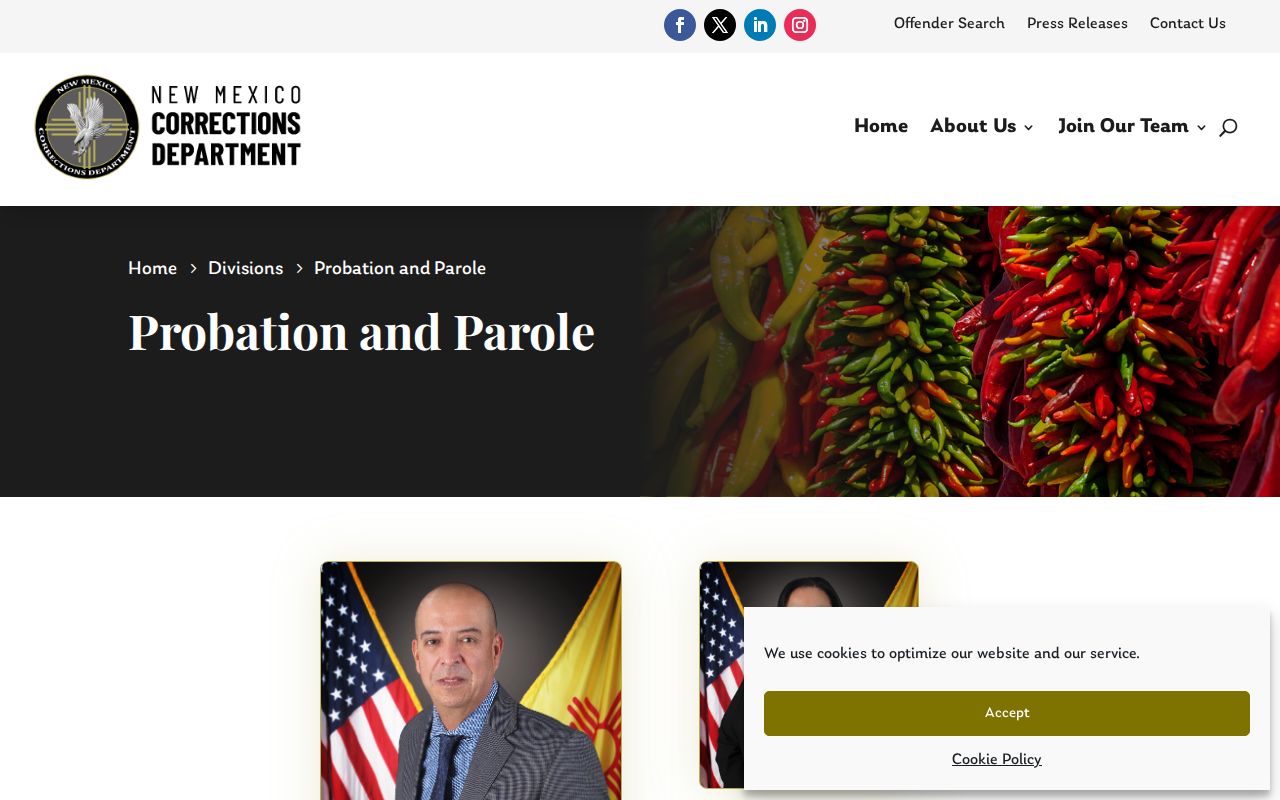
The state probation and parole page shows the separate authority that must be consulted when an address question depends on current supervision rather than registry publication.
Grant County and National Registry Searches
A Grant County search is the right first step for a person or address tied to the county. It is not enough when the relevant location could be in Arizona, another New Mexico county, or any other state. The U.S. Department of Justice National Sex Offender Public Website, or NSOPW, provides a cross-state public search after the user acknowledges its conditions. State and territorial registries remain the sources behind those results.
The National Sex Offender Public Website is most useful when a move, travel pattern, or uncertain jurisdiction makes one state search too narrow.
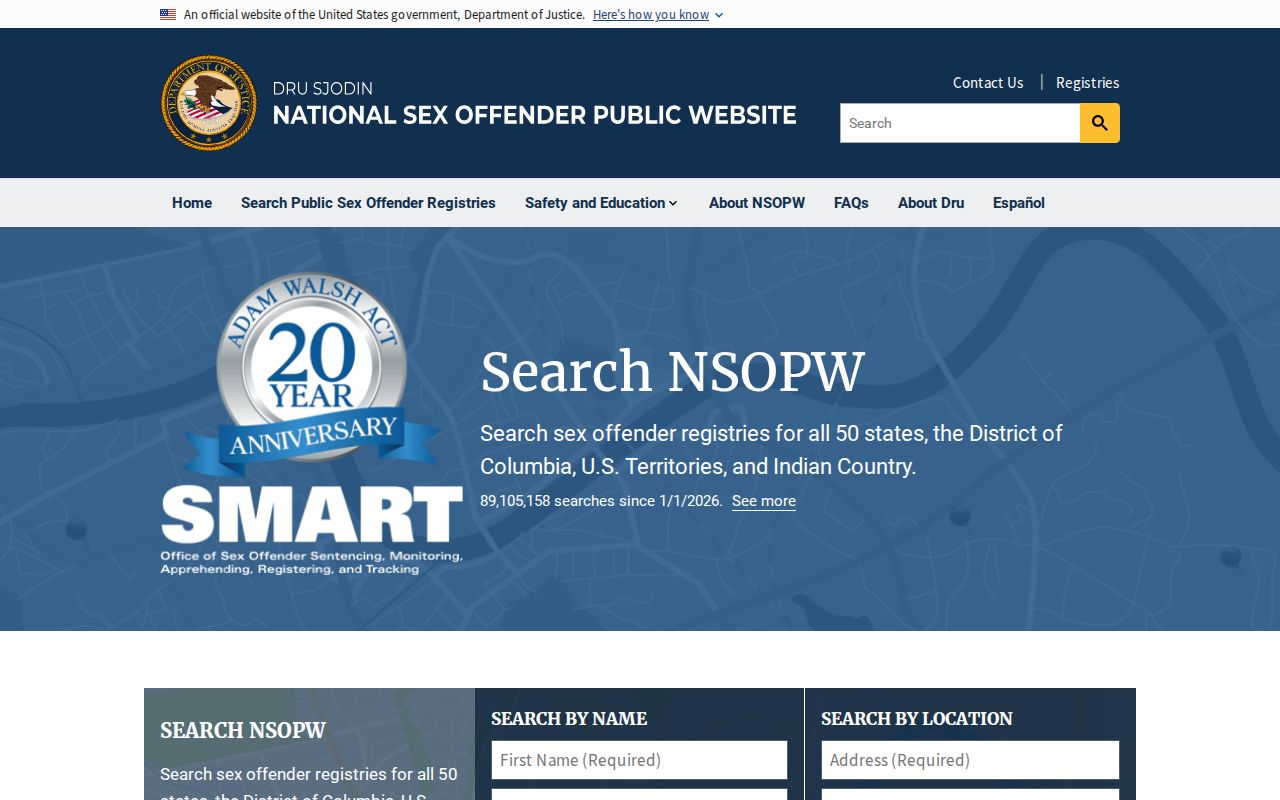
The national interface broadens geographic coverage, but the same limits remain: publication rules differ, some categories are not public, and a no-result response is not a universal clearance.
For a likely Grant County match, return to New Mexico OffenderWatch for the full live profile and local registering agency. For a suspected registration violation, report the facts to the sheriff or DPS. NSOPW is a search layer, not the office that investigates local compliance.
Using Registry Information Lawfully
Registry information supports community awareness, family safety planning, and informed contact with law enforcement. It does not authorize threats, surveillance, public shaming, or attempts to force someone from a lawful address. A profile also should not be treated as a measure of current danger. Read the published offense and status accurately, keep the record in context, and use official alert or reporting channels when a real concern develops.
Misuse is prohibited: Threatening, harassing, intimidating, or committing a crime against a registrant or household can violate New Mexico law. Follow the live portal warning and New Mexico SORNA, Sections 29-11A-1 and following.
If a profile appears wrong, send the issue to the registering agency rather than broadcasting it. Grant County Sheriff's Office can address local compliance data, while DPS LERB manages the statewide registry. If there is an immediate safety threat, contact law enforcement through the proper emergency channel. For an ordinary data question, use the published office contacts and describe the exact field or address at issue.
Note: Registry information is one public record layer; it should be confirmed through its official custodian and used only for lawful safety purposes.